
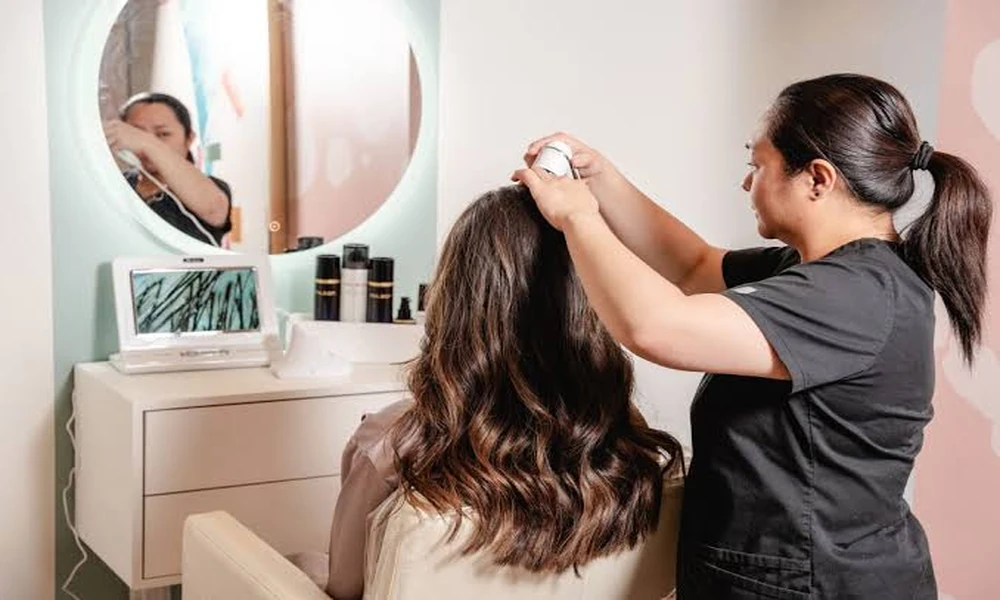
For someone with thinning hair, an extension consultation should establish whether a proposed method suits the existing hair before settling on extra length. A photograph can explain the look you enjoy, but it cannot answer the attachment question. Start with the areas where you want fullness, your usual styling habits and any hair or scalp concerns.
Show the missing shape, not only the longest hairstyle
A reference photograph often draws attention to the finished ends: the waves below the shoulders or the thickness of a ponytail. Your own frustration may be elsewhere. Perhaps the sides look sparse when tucked behind your ears, or a familiar cut no longer holds the silhouette you want. Describe that difference to the person assessing your hair. It is a more precise design brief than a request to copy the whole image.
Bring a photograph of a style you have actually worn and liked, if one is available. Explain what made it manageable. You might have valued a short drying routine, the freedom to leave the house without heat styling or the ability to wear a loose updo. These preferences give the consultation a practical direction and can reveal whether the dramatic reference style is really your priority.
Discuss colour and texture as part of the intended blend. A sample that looks appealing on its own still needs to work with the hair around it. Ask to see the proposed result described in ordinary terms: where fullness would be added, how the outline would change and which styling choices might reveal the attachment. Avoid treating an isolated swatch as a complete preview.
Make room for a smaller change. You may discover that the effect you want comes from a different distribution of fullness rather than the longest available option. Conversely, the consultant may explain why the visible area troubling you cannot be addressed well by the method you initially selected. That information is useful even when it changes your original shopping plan.
Let existing hair set the attachment conversation
The consultation needs to consider the hair that would support the addition. Ask the provider to explain what they are assessing and why a particular method is being discussed. You should not have to infer suitability from a product name or from the fact that another customer has worn the same system. Individual recommendations need individual reasons.
For a Mississauga starting point, Truly You’s hair-extension consultation information describes assessment alongside its extension offering. Use that description to frame an appointment about your own hair and desired appearance. The existence of an extension service does not mean every person experiencing thinning is a suitable candidate for it.
The American Academy of Dermatology warns that extensions can damage hair when precautions and care are inadequate, and that repeated pulling can cause hair loss. This is a reason to discuss tension and professional assessment before choosing a method. Do not accept pain as a necessary price of getting the style you want.
Explain any recent change in your hair or scalp, including concerns already being evaluated by a healthcare professional. A cosmetic consultation should not substitute for medical assessment of unexplained hair loss. If the reason for thinning is uncertain, ask which decisions can sensibly be made now and which depend on further advice. An appointment can produce a useful next step without ending in an installation.
Find out what wearing the option would involve
Ask the consultant to describe an ordinary week with the proposed extensions. How would you wash, dry and arrange your hair? Which tasks would you manage yourself, and which would require a return visit? Get instructions for the exact method being proposed. A routine from a video about a different attachment is not a reliable substitute.
Think beyond the first salon finish. If you usually exercise before work, travel with limited luggage or rely on a very short morning routine, explain that. These are design constraints worth discussing, not inconveniences to conceal until after the purchase. A style that only works with a routine you dislike may be a poor fit even if the initial photograph is attractive.
Understand maintenance and removal before agreeing to the first appointment. Ask who should remove or adjust the system, how return visits are arranged and what costs are separate from the initial service. Avoid assigning a generic maintenance interval to every method. The provider should explain the schedule relevant to your assessed situation and how to seek help if something changes.
Have the proposed costs described clearly enough to review at home. Separate the hair, fitting, blending or styling work, home-care purchases and later appointments where those are charged separately. You are not trying to predict every future expense. You are establishing what the initial quote covers and which ongoing commitments could affect your decision.
Keep a useful alternative in the discussion
If extensions are unsuitable, ask what other cosmetic approaches might address the shape you described. The answer could involve a different cut, a removable addition or another kind of hair solution, depending on assessment and available services. These possibilities should be explained on their own terms. They do not need to imitate extensions to be worth considering.
You can also leave the decision open. Request a written description of the recommended approach, the reasons behind it and any questions requiring medical input. Taking time to absorb an unexpected recommendation is reasonable, particularly when appearance and hair loss have become emotionally tiring subjects.
The reference photograph has done its job once the consultant understands what you miss about your hair. The worthwhile outcome is an assessed route toward a manageable appearance, even if the route uses less length, a different method or a later decision than you first imagined.