
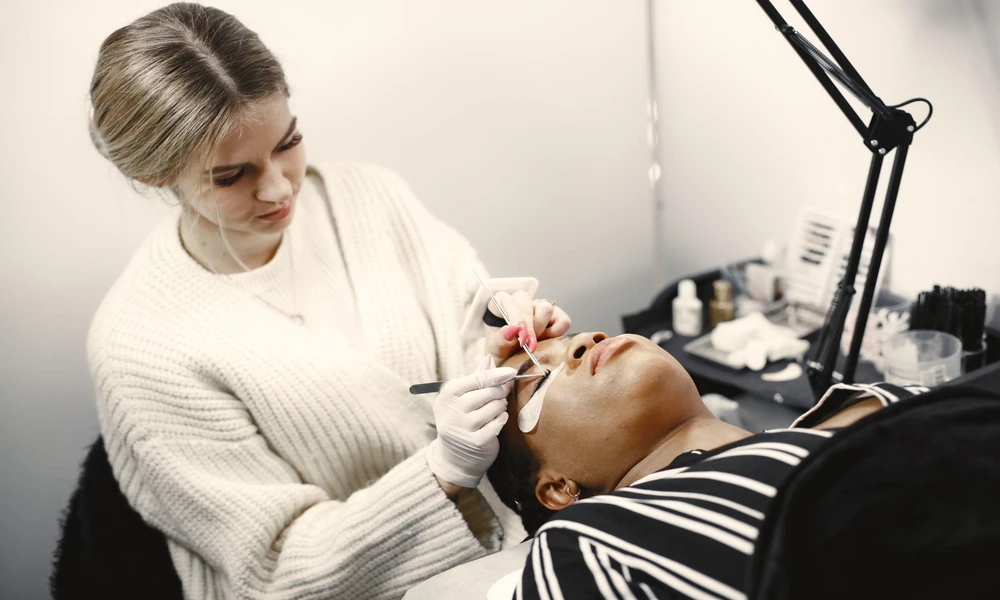
Two frustrations bring most people to ask about LED lashes. The first is retention: extensions that look full on the day of the appointment and noticeably sparse within a week or two. The second is discomfort, whether stinging or watering eyes during application from adhesive fumes. Traditional lashes in Singapore rely on adhesives that cure through exposure to moisture in the air, a process that depends heavily on humidity and timing. LED systems use a different adhesive that stays liquid until exposed to a specific light, which changes how bonding happens in ways that can matter for both concerns. Understanding the actual differences helps clarify whether switching is likely to help.
1. How and When the Adhesive Bonds
Traditional lash glue begins curing as soon as it meets moisture in the air, so the technician works within a short window before it sets. In a humid climate like Singapore’s, curing can happen very quickly, and variations in room humidity from one appointment to the next can affect how consistently each bond forms. Imperfect bonds are one common reason extensions shed earlier than expected.
LED adhesive remains workable until the technician deliberately cures it with a light source, typically in a matter of seconds. This allows the extension to be positioned precisely before the bond is set, and it removes much of the dependence on ambient humidity. Many clients and technicians report more consistent retention as a result, though outcomes still depend on technique, natural lash condition, and aftercare.
How the Two Methods Compare
| Aspect | LED Lash Extensions | Traditional Lash Glue |
| Curing trigger | Specific light source, applied deliberately | Moisture in the air, begins immediately |
| Humidity dependence | Low | High, especially in tropical conditions |
| Fume exposure during application | Generally reduced | More noticeable during curing |
| Positioning control | Extension can be adjusted before curing | Short window before the glue sets |
| Availability | Fewer salons offer it | Widely available |
2. Exposure to Fumes During Application
Much of the stinging and watering people associate with lash appointments comes from fumes released as traditional adhesive cures near the eye. Because LED adhesive cures almost instantly under the lamp and releases fewer vapours in the process, many clients find appointments more comfortable. This is one reason LED lash extensions in Singapore are often recommended for people who find standard appointments irritating, though reduced fumes are not the same as eliminating sensitivity entirely.
3. Appointment Time and Refill Patterns
Faster, controlled curing can shorten application time, particularly for full sets, since each lash doesn’t require waiting for glue to set in open air. Where retention improves, the interval between refills may also lengthen, which affects the long-term cost and time commitment of maintaining extensions. It’s worth asking a salon what refill schedule their LED clients typically follow rather than assuming a specific figure, since natural lash shedding cycles still set a limit on how long any extension stays in place.
Who Should Still Proceed With Caution
Reduced fumes don’t make LED adhesive suitable for everyone. The formulations still contain acrylate-based ingredients, and people with known allergies to lash adhesives, acrylates, or cosmetic ingredients may still react. Anyone with a history of reactions, dry eye, recent eye surgery, or an ongoing eye condition should mention it before treatment and ask about a patch test, and those with medical concerns should consult an eye doctor first. The LED lamp is directed at closed eyes with protection in place, and it’s reasonable to ask a technician what shielding they use and what wavelength their system operates at. Choosing a provider of eyelash extensions in Singapore who raises these questions at consultation, rather than waiting to be asked, is generally a good indication of how carefully the treatment itself will be carried out.
Contact HighBrow to discuss whether LED lash extensions suit your eyes and arrange a patch test before your first full set.